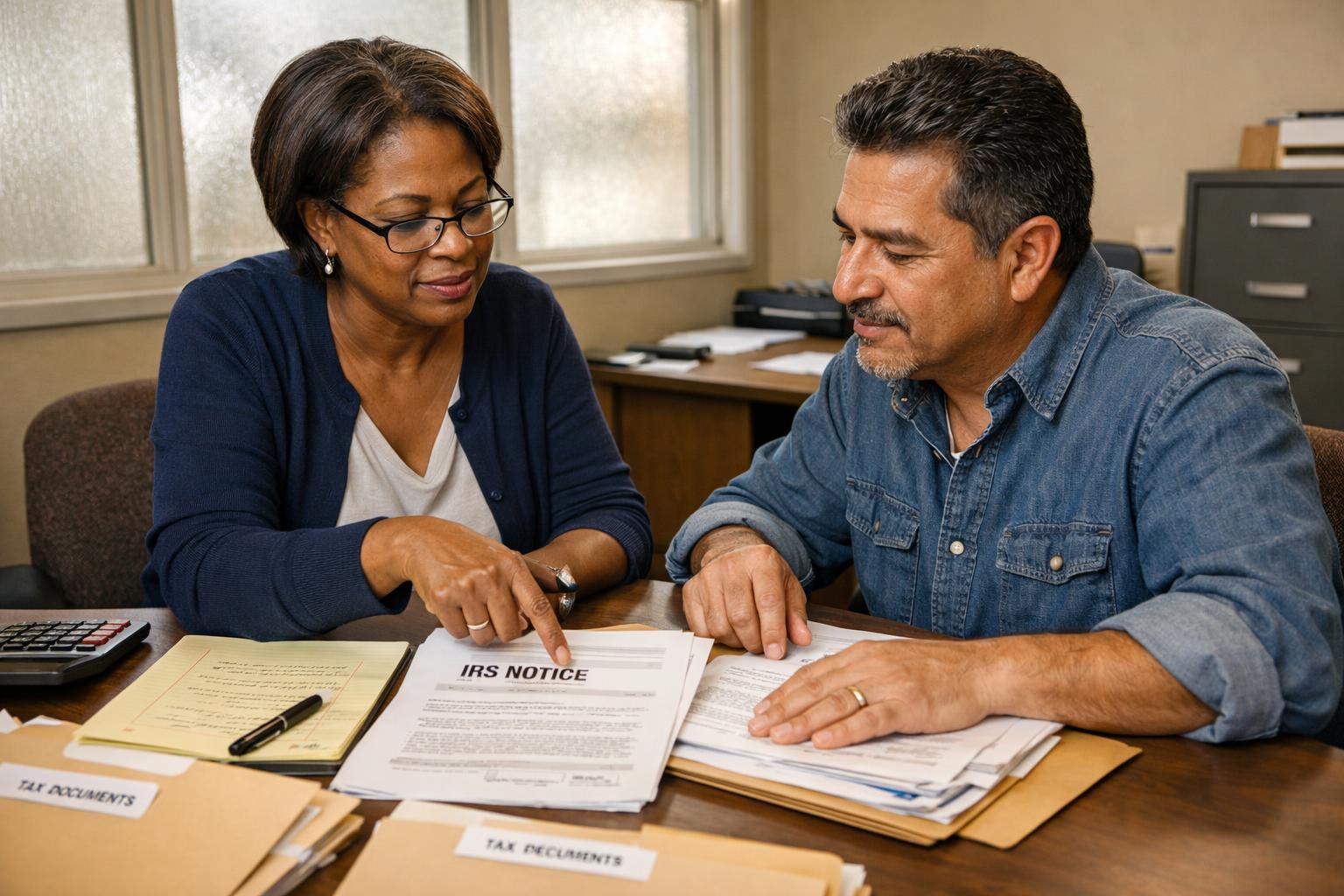
When you bring a CP2000 notice to a tax professional, the documents you provide can make a significant difference in how effectively they can respond on your behalf. This article lists the most important documents to bring.
A CP2000 is a notice from the IRS proposing changes to a tax return based on information that does not match what third parties reported. Responding to it requires more than reviewing the original return. The tax professional handling the response needs to reconstruct what actually happened during that tax year, verify the IRS figures, and build a clear, documented reply. That process depends heavily on what the taxpayer is able to provide at the start.
Why Document Preparation Matters Before the First Meeting
A tax professional can only work with what they have. If key records are missing, the response may be delayed while documents are tracked down, or the professional may need to submit a partial response and request additional time from the IRS. Arriving organized saves time and often reduces the cost of professional help, since less time is spent locating basic information.
The IRS typically gives 60 days to respond to a CP2000 notice. That window moves quickly once you factor in scheduling a consultation, gathering records, and allowing the professional time to prepare and review the response. Coming to the first meeting with a reasonably complete set of documents puts the process on a much better footing.
1. The CP2000 Notice Itself
The first thing a tax professional needs is the actual CP2000 notice, including all pages. The notice contains the IRS’s proposed changes broken down by income category, the specific tax year in question, the notice date, and the response deadline. It also includes a response form, usually toward the back, which the professional may use or reference when drafting the reply.
Some taxpayers bring only the first page or a portion of the notice. The full document matters because the schedules showing each discrepancy are typically located toward the back. The notice number and IRS contact information printed on the notice are also needed if the professional contacts the IRS by phone or in writing during the process. If you need help understanding your CP2000 notice you can use our free analyser here.
2. A Copy of your Original Tax Return
The tax professional will need a complete copy of the return filed for the year in question, including all schedules, forms, and attachments that were part of the original submission. If the return was prepared by a different professional, a copy can typically be obtained from your own files or from the IRS using Form 4506-T.
The return gives the professional a baseline. They need to see exactly what was reported before they can assess what the IRS believes was missing or incorrectly matched.
3. Income Documents from That Tax Year
The IRS issues CP2000 notices when income reported by employers, financial institutions, or other payers does not match what appeared on the tax return. The core of most CP2000 responses therefore involves income documentation.
Depending on your situation, this could include:
- W-2 forms from all employers during the year
- 1099-NEC or 1099-MISC forms for freelance or contract work
- 1099-INT and 1099-DIV forms for interest and dividends
- 1099-B forms for investment or brokerage transactions
- 1099-R forms for retirement distributions
- 1099-G forms for unemployment compensation or state tax refunds
- SSA-1099 forms for Social Security benefits
- K-1 forms from partnerships, S corporations, or trusts
Even if you believe the income was already reported correctly, providing the source documents allows the professional to verify each figure and identify any discrepancies in how income was categorized or entered on the return.
4. Supporting Records for Deductions or Adjustments in Dispute
In some CP2000 cases, the issue extends beyond unreported income to deductions or adjustments that affect the tax calculation. If the proposed changes involve areas such as business expenses, cost basis on investments, or deductible contributions, the supporting records for those items become relevant.
For investment transactions, this often means brokerage statements showing the original purchase price of assets that were later sold. Cost basis documentation is one of the more common gaps in CP2000 cases involving 1099-B income. Without it, the IRS may calculate a larger gain than actually occurred.
Any Prior IRS Correspondence About This Notice
If you have already responded to the CP2000 in any way, or if you have received follow-up letters from the IRS related to the same notice, bring all of that correspondence as your tax professional needs to know where things stand. A response that was already submitted, even a brief one, becomes part of the file and affects how subsequent communications should be framed.
This also includes any notices of deficiency or other letters that arrived after the original CP2000. The type of letter matters because it indicates what stage the matter has reached.
Identity and Authorization Information
If you want the tax professional to communicate directly with the IRS on your behalf, they will need a signed Form 2848, the IRS Power of Attorney and Declaration of Representative. Some professionals will prepare this form during the meeting, but it is worth knowing in advance that it will be required. Without it, the IRS will not discuss your account with the professional directly.
Information About Amended Returns, if Any
If an amended return was filed for the year in question, include that document as well. An amended return changes what was officially reported, and the professional needs to know whether the original or amended figures represent the most current filing before drafting any response.
A Few Practical Notes
Not every taxpayer will have all of these documents readily available. Missing W-2s or 1099s from prior years can often be retrieved through the IRS’s transcript service or by contacting the original payer. A tax professional can guide you through that process, but it takes time, so starting early in the response window is helpful.
Bringing organized copies rather than originals is generally a practical choice. Keeping your own complete set of everything provided allows you to reference the same information the professional is working from throughout the process.
Return to hub:
Browse more CP2000 response guides in this section.
Disclaimer: The information provided on this website is for general informational purposes only and does not constitute legal or tax advice. CP2000Response.com is not affiliated with the IRS, any law firm, or government agency.