When the IRS sends a CP2000 notice, one of the first practical questions that comes up is where to actually send your response.
Form 5564, the Notice of Proposed Adjustment for Underpayment/Overpayment included with CP2000 notices, needs to be mailed to a specific IRS address that varies depending on your situation. Getting that detail right matters, because sending your response to the wrong location can cause delays in processing and may complicate the timeline for resolving the notice. This article walks through how to find the correct mailing address, what to include with your response, and a few practical considerations to keep in mind before you send anything.
The Mailing Address Is Printed on Your CP2000 Notice
The most reliable place to find the correct mailing address for your CP2000 response is the notice itself. The IRS prints a specific return address on each notice, and that address is what you should use when mailing your response. This address corresponds to the IRS campus currently handling your case, and it may differ from general IRS mailing addresses found through other sources.
Because CP2000 notices are processed at different IRS service centers depending on factors like your filing location and current case volume, there is no single universal address that applies to everyone. Using the address on your specific notice is the most reliable approach.
The mailing address is typically found near the top right corner of the first page of the CP2000, often below the notice date and your taxpayer identification number. It is usually clearly labeled and formatted as a standard mailing address.
What to Include When You Mail Your Response
Form 5564 is typically one part of a larger response package. Depending on whether you agree or disagree with the IRS’s proposed changes, what you include with the form will differ.
If you agree with the proposed changes, you would generally complete and sign Form 5564 and return it with any required payment or payment arrangement information. If you disagree, you would typically include a written explanation along with supporting documentation, and you would not sign the agreement portion of the form.
Consider including the following with your mailed response:
- A copy of the CP2000 notice itself, or at minimum the response page
- Form 5564, completed and signed if you are agreeing to the proposed changes
- A clear written explanation if you are disputing any part of the notice
- Copies of supporting documents such as 1099s, W-2s, brokerage statements, or other records relevant to the income or deductions in question
- Your name, Social Security number or taxpayer ID, and the tax year referenced on the notice
Keep copies of everything before you mail it. This straightforward step makes follow-up much easier if questions arise later.
Sending Your Response by Mail
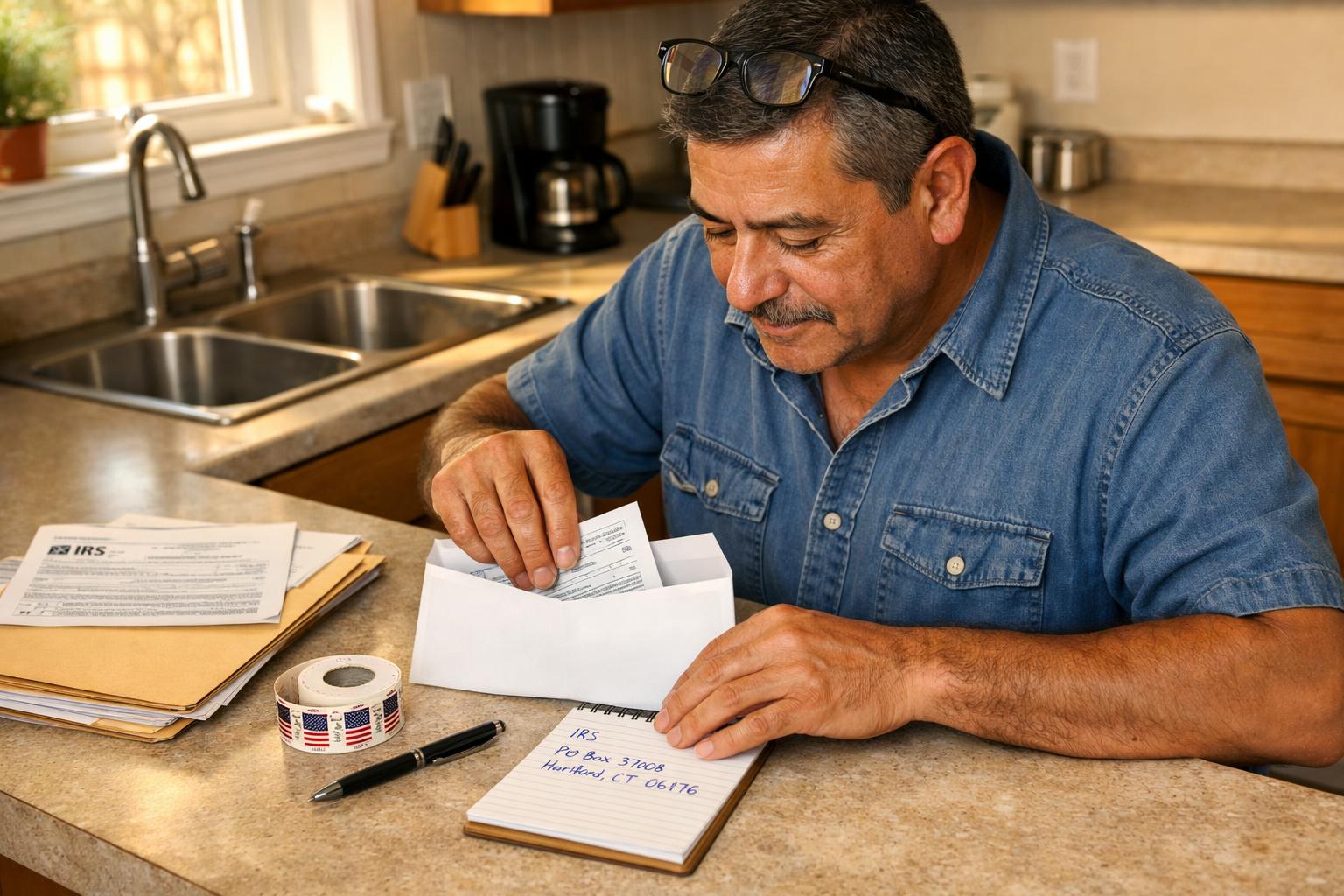
The IRS accepts responses sent through standard U.S. mail, as well as through certified or tracked mail options. Using certified mail with return receipt requested is a common choice for tax correspondence because it creates a record that your response was sent and received. That documentation can be helpful if there is ever a question about whether you responded within the time frame given in the notice.
Private delivery services such as FedEx or UPS are also accepted by the IRS for official correspondence, though it is worth confirming the specific address format required for those services, as it may differ slightly from the standard postal address on your notice.
The CP2000 notice includes a response deadline, typically 60 days from the date printed on the notice. Mailing your response well before that deadline is advisable. If you are close to the deadline, you can call the number on the notice to request additional time to respond.
If You Cannot Find the Address on Your Notice
In some cases, taxpayers may be working from a copy, a scan, or a document where the address is unclear. If the mailing address is not legible or available, there are a few ways to locate the correct information.
The IRS website at IRS.gov includes contact information for various service centers and notice-specific guidance. Calling the phone number listed on the CP2000 notice is another option. IRS representatives can confirm the correct mailing address for your response and answer procedural questions about submitting your documentation.
Fax as an Alternative Option
Some CP2000 notices include a fax number alongside the mailing address. When a fax number is listed, it can be used to submit your response more quickly than mail. This can be useful if you are responding close to the deadline.
If you use fax, keep the confirmation page showing a successful transmission. Like a certified mail receipt, this serves as documentation that your response was sent. Not all notices include a fax number, so check your specific CP2000 to see whether one is provided.
Keeping Track of Your Response After Mailing
After mailing your response and any accompanying documents, the IRS generally takes several weeks to process the submission and send a follow-up communication. Processing times can vary depending on the time of year and current IRS workload.
If several months pass without any acknowledgment, it is reasonable to follow up by calling the number on your original notice. Having your tracking or certified mail information available when you call makes those conversations more straightforward.
Keeping copies of your response, supporting documents, and proof of mailing gives you a complete record of the correspondence. This is useful not only for potential follow-up with the IRS, but also for your own records in the event the tax year in question comes up in future filings or communications.
Return to hub:
Browse more CP2000 response guides in this section.
Disclaimer: The information provided on this website is for general informational purposes only and does not constitute legal or tax advice. CP2000Response.com is not affiliated with the IRS, any law firm, or government agency.