CP2000 Response Mailing Instructions
By CP2000Response Editorial Team | Reviewed for legal context by David McNickel
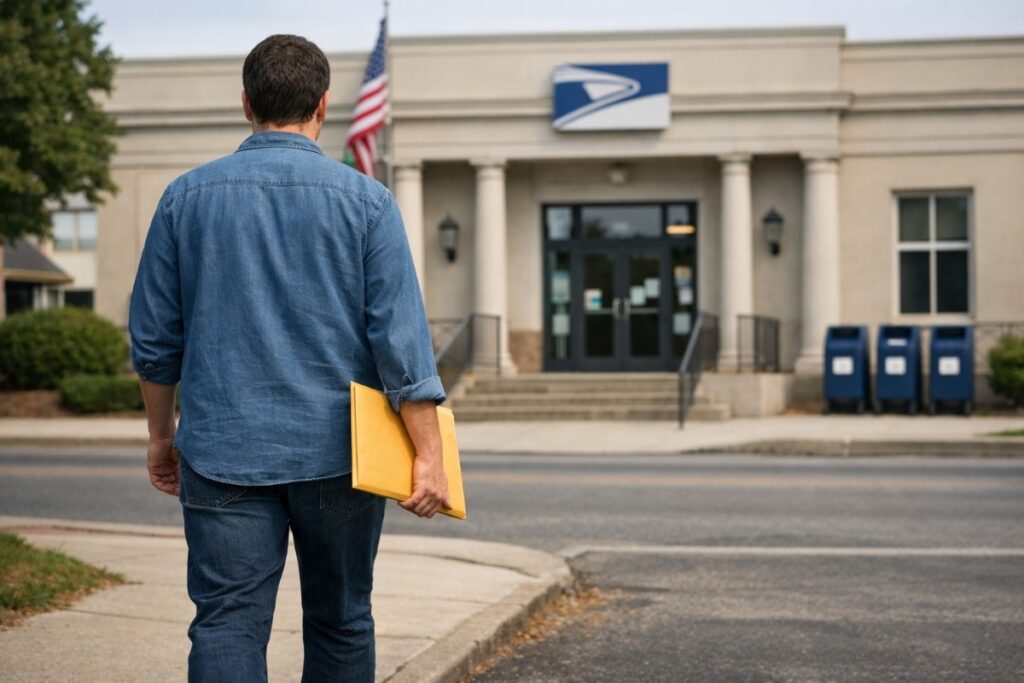
After preparing your CP2000 response – completing the form, writing your explanation, and gathering your supporting documents – the final step is getting it to the IRS correctly. How you mail a CP2000 response matters as much as what it contains.
A complete, well-prepared response sent to the wrong address or without a certified mail record is no different, practically speaking, from an incomplete one.
This article provides a step-by-step mailing checklist, explains the difference between certified and regular mail for this purpose, covers the specific timing requirements, and describes how to confirm delivery. Check here for more related forms and documents.
Pre-Mailing Checklist
Before sealing the envelope, work through the following checklist:
- The CP2000 response form is signed and dated. On a joint return, both spouses have signed.
- You have checked the correct agreement or disagreement box on the response form.
- Your written explanation addresses every disputed item in the notice with specific factual references.
- Every exhibit referenced in your written explanation is attached and labeled.
- You are sending copies of all documents, not originals.
- A cover sheet or index listing all attachments is included.
- You have confirmed the mailing address from the notice itself – not from a generic IRS website listing.
- If agreeing and paying by check, the payment voucher is enclosed in the same envelope or mailed to the separate payment address on the voucher.
- You have made a complete copy of every page in the envelope before sealing it.
- The deadline date has been confirmed and the mailing will be postmarked on or before that date.
Do not proceed to the post office until every item on this checklist is complete.
Certified Mail: The Required Standard
For CP2000 responses, USPS certified mail with return receipt requested is the appropriate mailing method. It is not technically required by the IRS – you can legally mail a response using any delivery method – but it is the only reliable way to establish a verifiable postmark record that you control.
The CP2000 deadline is postmark-based. If the IRS later claims your response was not received or was received after the deadline, your certified mail receipt and USPS tracking record are what establish that you mailed on time. Without them, you are relying on the IRS’s records, which may not be accurate.
At the post office:
- Request certified mail with return receipt – this is sometimes called “green card” service because of the physical return card (PS Form 3811)
- You will receive a certified mail receipt at the counter, which shows the date of mailing and the tracking number. Keep this receipt permanently for this matter.
- The green card is attached to the envelope at the post office. When the IRS receives and signs for the package, the card is detached and mailed back to your return address. File the green card when it arrives.
USPS certified mail tracking is available online at USPS.com using the tracking number on your receipt. Check the tracking record within a week of mailing to confirm delivery. Print and retain the tracking confirmation page.
Using Private Delivery Services
If you prefer to use a private carrier, the IRS recognizes certain FedEx, UPS, and DHL services as acceptable alternatives to USPS certified mail for purposes of establishing a timely postmark. These services must be IRS-designated – not all service levels from each carrier qualify.
Before using a private carrier:
- Confirm the service level is on the current IRS-designated list (available at IRS.gov – search “private delivery services”)
- Confirm the mailing address on your notice is a street address, not a P.O. box – private carriers cannot deliver to P.O. boxes
- Retain the carrier’s receipt and printed delivery confirmation
Private carriers provide their own timestamped delivery records that the IRS accepts as equivalent to a certified mail postmark.
Standard First-Class Mail: When It Is Used and Its Limitations
First-class mail is an acceptable delivery method for IRS correspondence and will reach the IRS if addressed correctly. The limitation is evidentiary: standard first-class mail provides no delivery confirmation and no postmark record you can independently verify. If the IRS claims your response was not received or was received late, you have no documentation to counter that position.
For a CP2000 response where a deadline is in effect, first-class mail is an unnecessary risk. The additional cost of certified mail with return receipt – typically a few dollars – is minimal relative to the consequences of a disputed or missed deadline.
The Mailing Address: Confirming It Is Correct
The mailing address for your CP2000 response is printed on the notice. Find it in the response instructions section or in the notice header. It is typically formatted as:
- Internal Revenue Service
- AUR (Automated Underreporter) Unit
- [City], [State] [ZIP code with extension]
Transcribe the address exactly as printed, including any internal stop codes, suite numbers, or ZIP code extensions. Addressing the envelope to “Internal Revenue Service” with only a city and state is not sufficient and will cause sorting delays at the IRS campus.
Do not use an address from a previous IRS notice for a different matter. Campus routing can change, and an address that was correct for a prior-year notice may not be correct for the current one.
Envelope Preparation
- Use a full-size business envelope (9×12 or larger for thicker response packages) – do not fold response documents into a standard #10 envelope if they are printed on full-size paper, as folding can obscure text or damage documents during handling
- Write “CP2000 Response” and your Social Security number in the upper left corner of the envelope – this helps route the package correctly if the envelope and contents are separated during IRS processing
- Include a return address on the envelope
- If the package is thick, confirm the postage is sufficient – underpaid postage can cause a package to be held at the post office or returned
Timing the Mailing
Mail at least two to three business days before the deadline. The USPS postmark on certified mail reflects the date you bring the item to the counter, not the date it departs on a delivery vehicle. The deadline is the postmark date, so mailing on the last business day before the deadline is technically valid – but it leaves no margin for any logistical issue.
If the deadline falls on a Saturday, Sunday, or federal legal holiday, it is extended to the next business day. Confirm this by counting from the notice date before assuming an extension applies.
Post office hours vary. For certified mail with a postmark on a specific date, you must bring the item to the counter before the post office closes. A certified mail envelope dropped in a street collection box after the last pickup will be postmarked the following business day, not the day you dropped it in.
After Mailing: Confirming Delivery and Retaining Records
Immediately after mailing:
- Photograph or scan your certified mail receipt
- Record the tracking number in your files alongside the notice number and the deadline date
- Check USPS tracking online after five to seven business days to confirm delivery
- When the green card is returned to you, file it with the rest of your CP2000 documentation
Do not discard any mailing documentation until the matter is fully resolved and you have received a closing letter from the IRS. If the matter escalates, the mailing documentation may be needed to demonstrate that a timely response was submitted.
Summary
Mail your CP2000 response to the address printed on the notice – not a general IRS address. Use USPS certified mail with return receipt requested, or an IRS-designated private delivery service if the address is a street address. Confirm the complete checklist before sealing the envelope. Mail at least two to three business days before the deadline. Retain the certified mail receipt, tracking number, and all mailing documentation until the matter is fully closed.
Return to Hub:
Continue exploring document preparation, mailing procedures, and CP2000 response forms.
The information provided on this website is for general informational purposes only and does not constitute legal or tax advice. CP2000response.com is not affiliated with the IRS, any law firm, or government agency.